Bingo Cash
- 3.3
- Rating
- 10.00K
- Installs
- Free
- Price
 Analysis by App-foxy
I approached Bingo Cash as a newcomer rather than assuming I already knew what to expect from a bingo app. Its basic idea is easy to understand: it is a board game built around live, skill-based multiplayer tournaments, with the possibility of competing for real rewards. That combination makes it more active than a traditional offline bingo session, but it also means the experience deserves a little more attention than simply tapping numbers while watching television.
The game is free to download and comes from Papaya Gaming. It is listed for Everyone, runs on Android 9 or later, and its current version is 13.9.0. Those details make it approachable for many casual players, although the tournament angle is important: this is not just a quiet solo pastime. You are entering a competitive environment where concentration, timing, and understanding the round matter.
What the first session feels like
My first recommendation is to treat the opening session as practice for the rhythm of the game, not as a test of whether you can win immediately. Bingo is familiar, but a live multiplayer format can make even a simple board feel faster. The useful skill is not only recognizing a called number; it is keeping your attention on the board, checking patterns carefully, and avoiding rushed taps when the pace increases.
You May Also Like

 AccuWeather: Weather Radar
AccuWeather Review: A Quick, Clear Forecast for Everyday Decisions
For everyday plans, the best forecast is the one you can understand quickly. AccuWeather makes rain timing, radar, and local conditions easy to act on, with a few trade-offs.

 Hill Climb Racing
Why Hill Climb Racing Still Turns Crashes Into One More Run
A tiny car, a bumpy hill and one more upgrade: Hill Climb Racing keeps resurfacing because its simple chaos makes every near-miss feel personal.

 AliExpress - Shopping App
AliExpress Makes Global Shopping Feel Personal, but Shoppers Bear the Risk
AliExpress turns a global marketplace into a pocket-sized discovery engine. Its reach is useful, its shopping loop compelling, and its trade-offs easy to miss.

 Lords Mobile: Kingdom Wars
Lords Mobile Is a Kingdom-Building Routine, Not a Quick Match
A case-by-case verdict on the building, battles, device demands, and social commitments that make Lords Mobile rewarding for some players and exhausting for others.

 PDF Scanner app - TapScanner
TapScanner Makes Paperwork Easier to Capture, Check, and Share
TapScanner makes scanning with a phone feel less like a rescue operation and more like a dependable step in getting work done. Its capture tools are useful, though not flawless.

 Block Blast!
 Shows How Much a Puzzle Game Can Leave Out
A quiet grid game shows why puzzle players increasingly value instant clarity, repeatable skill and low-pressure play—and where the genre still needs to catch up.
More From Our News Desk
View All News


The store summary presents the game as a way to join live skill-based tournaments and compete for real rewards. That wording sets the right expectation: the competitive element is central. If you want a purely relaxing board game with no pressure, this may feel more demanding than expected. If you enjoy short contests and like the idea that careful play matters, the format is more appealing.
I also found it helpful to separate two goals. The first is learning how a round flows and how quickly I can read the board. The second is deciding whether the competitive reward structure suits me. A player can enjoy the first goal without making the second a priority. That distinction prevents the common mistake of judging the whole game by one early result.
Setting up without overthinking it
Because the game is free, the initial decision is relatively simple: install it, open it, and use the first moments to understand the presentation before committing serious attention to a tournament. I would not begin while distracted, walking, or doing another task that makes quick visual checks difficult. A quiet few minutes gives you a fairer impression of the controls and pace.
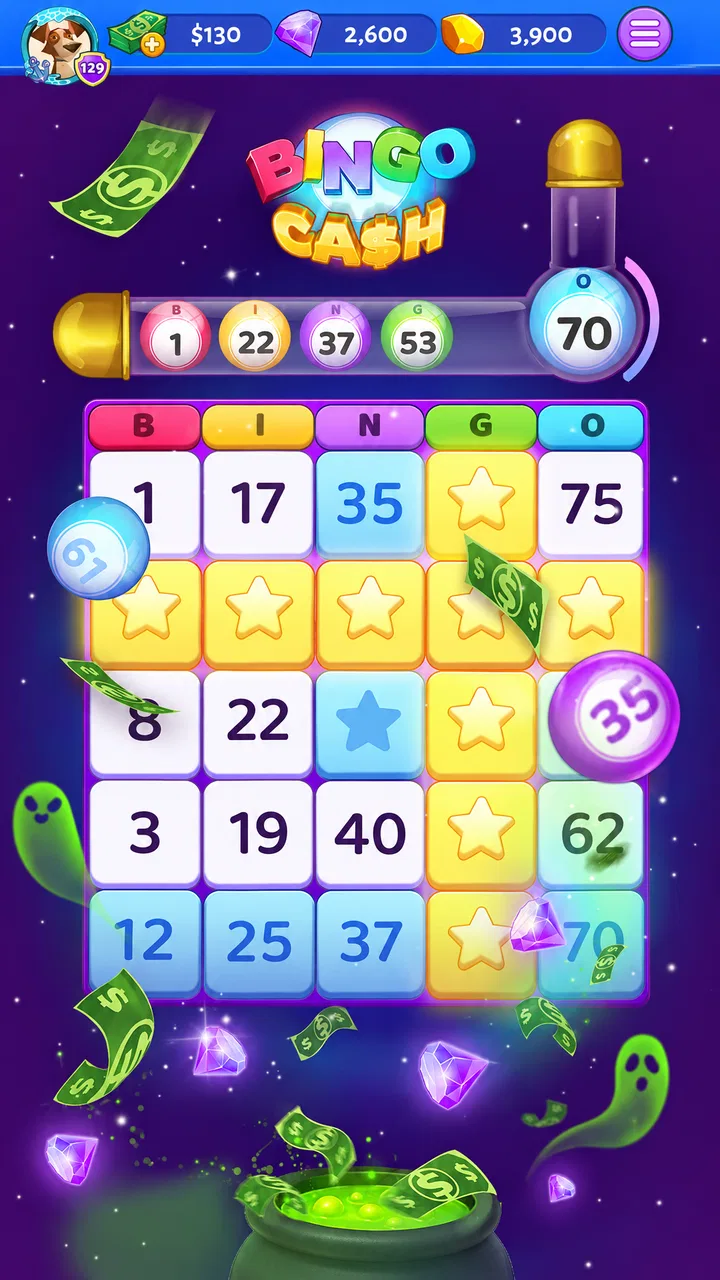
Before entering a competitive round, I would look for the basic visual cues that explain what is happening: which numbers have been called, what your board is asking you to complete, and where the action needed to continue is located. This is a practical first-time habit. Rather than tapping around to discover everything during a live contest, spend the opening moments identifying the board, the called-number area, and the confirmation or progress feedback.
The game is categorized as a board title, and that description is accurate in the sense that the board remains the center of attention. Still, the live tournament setting changes how you use it. Traditional bingo can be played at a leisurely pace, while a multiplayer round rewards preparation. I would keep the screen unobstructed, use a stable connection, and avoid switching between apps during a round whenever possible.
One useful adjustment is to decide in advance how much time you want to give the session. A short, focused attempt is better than playing while tired and then blaming the controls for mistakes. This is especially relevant for first-time users because unfamiliar layouts make small interruptions more costly. Once the visual language becomes familiar, the same pace should feel less intimidating.
Turning the first round into a meaningful success
For me, a meaningful first success would not necessarily be finishing at the top. It would be completing a round while understanding why each tap was made. That sounds modest, but it is the foundation for judging a skill-based game fairly. If you can follow the calls, keep your board state clear, and finish without frantic guessing, you have learned enough to decide whether the tournament format suits you.
A practical workflow is to read first, act second, and verify third. When a number appears, locate it deliberately rather than sweeping across the board at random. After marking it, take a brief look at the board’s overall pattern before moving on. This extra pause may feel slow, but it reduces the kind of error that comes from reacting to the latest call while forgetting the larger objective.
Another non-obvious tip is to pay attention to your own mistakes instead of only the final result. If you lose track because the calls arrive quickly, the issue is concentration and pacing. If you repeatedly miss a number on the board, the issue may be visual scanning. If you understand the board but hesitate over the next action, the issue is familiarity with the interface. Each problem calls for a different adjustment, and simply playing faster will not solve all three.
I would also avoid treating a close result as proof that you should immediately increase your commitment. A near miss can mean you are learning the format, but it can just as easily reflect one rushed decision. The better next step is to repeat the process with the same calm routine and see whether your decisions become more consistent.
Where new players can become confused
The biggest potential confusion is the difference between ordinary bingo and live skill-based multiplayer bingo. In a casual offline game, the social atmosphere may be the main attraction and the pace can be adjusted around the group. Here, the competitive environment makes attention part of the challenge. Someone expecting a passive number-matching game may find the experience surprisingly intense.
The phrase “compete for real” can also create the wrong mindset if it is read as a promise of easy results. I would approach the reward element as a reason to understand the rules carefully, not as a reason to rush into every available contest. The more important question is whether you enjoy the underlying play when there is no immediate success. If the answer is no, the reward angle alone is unlikely to make the game satisfying for long.
Another source of friction is visual overload. Live rounds naturally ask you to divide attention between the latest call and your existing board. New players may stare at the newest information and then forget to check the rest of the card. I found that scanning in a fixed order is more dependable than looking wherever the eye happens to land. Choose a direction, check methodically, and keep the board’s objective in mind.
It is also worth remembering that a free game can still demand something from you besides money: time, concentration, and patience. If you are playing during a commute, in a noisy room, or while answering messages, the competitive format may feel unfair even when the controls are working normally. A calmer setting is not just more comfortable; it gives the skill-based design a proper chance to show what it is doing.
How it compares with familiar alternatives
Compared with a standard bingo app focused on solo play, Bingo Cash is more suitable for someone who wants other players and tournament pressure to influence the session. That makes it more engaging for competitive personalities, but less suitable for people who want an entirely predictable pace. A conventional offline board game remains the better choice for family gatherings, relaxed conversation, or players who do not want a live contest shaping the experience.
Compared with a purely luck-driven bingo experience, the skill-based positioning gives you more reason to examine your habits. You can work on reading accuracy, timing, and concentration rather than simply waiting for a favorable sequence. That does not remove uncertainty from a competitive round, but it changes the way I evaluate a result: poor play can be examined and improved instead of dismissed as bad luck.
On the other hand, a slower puzzle or strategy board game may be a better alternative if you prefer planning several moves ahead. Bingo Cash asks for quick recognition and disciplined attention, not long-term tactical construction. Likewise, a social bingo room may be preferable if the main thing you want is conversation rather than performance. The right choice depends less on the label “board” and more on whether you want speed and competition.
Who will get the most from it
I see the strongest fit for players who already enjoy bingo but want a more active format, and for newcomers who like short competitive challenges. It can also suit someone who wants a focused break: a session where the objective is clear, the board is always visible, and improvement comes from becoming more attentive. The game’s Everyone rating makes it broadly approachable, though the competitive reward context still calls for sensible judgment from each player.
A realistic everyday scenario would be a short evening break after finishing household tasks. I would sit down without another app open, play one round while fully focused, and then decide whether the experience was enjoyable before continuing. That approach is more useful than opening it repeatedly in spare seconds, because fragmented attention makes it harder to tell whether the game itself is engaging or whether the situation is simply inconvenient.
I would be more cautious about recommending it to people who dislike time pressure, competitive rankings, or the possibility of feeling disappointed after a close round. It is also not my first choice for someone looking for a deep, slow board-game system with extensive planning. Those players may appreciate the familiar bingo foundation but eventually want more control over the outcome than this format is designed to provide.
What to do after the first useful session
After one understandable round, the next step is to identify one improvement target. I would choose only one: faster number recognition, more careful scanning, or steadier pacing. Focusing on a single weakness makes the next session informative. Trying to improve everything at once usually produces more hurried play and makes it difficult to know what actually helped.
It is also sensible to decide what “worth continuing” means for you. For one player, that may be enjoying the live competition even without a strong result. For another, it may be seeing clear improvement in accuracy. If neither happens after several focused attempts, switching to a slower bingo game or a different board title may be the better decision. Not every familiar format suits every player, and there is no benefit in forcing a competitive game to behave like a relaxing one.
The developer, Papaya Gaming, has positioned this release around the multiplayer tournament experience rather than presenting it as a static digital card. Its average rating is 3.3 from over a hundred ratings, while the listing shows more than fifty written reviews and over ten thousand installs. I read that as a sign to keep expectations measured: there is enough interest to make the format worth trying, but the audience response is not a reason to assume it will fit everyone.
The release is dated June 6, 2026, and the listed version is 13.9.0. For a first-time user, the practical takeaway is to check that the device meets the Android 9 minimum and then judge the experience through actual play rather than through the promise of rewards. The setup is accessible, but the quality of your session depends heavily on whether you give the live board your full attention.
My recommendation after trying the format
I would recommend Bingo Cash to a friend who likes bingo but wants a competitive multiplayer twist and is comfortable learning through a few focused rounds. The best way in is to start calmly, understand the board before chasing results, and treat the first successful action as accurate, confident play rather than an immediate top finish.
I would skip it in favor of a traditional bingo app or an offline board game if I wanted a slow, social, low-pressure experience. I would also avoid making the reward possibility the only reason to play. The game is most convincing when the live skill element itself is enjoyable: noticing patterns, staying composed, and improving the way you respond to each call.
Overall, this is a free board game with a clear competitive identity. Its strongest appeal is the shift from passive bingo toward attentive multiplayer play. Its main challenge is that the same live structure can feel demanding when you are distracted or expecting a leisurely pace. Start with one deliberate session, learn the rhythm, and then decide whether the tournament format adds the excitement you want.
FAQs for Bingo Cash
01What is Bingo Cash and how does the game work?
Bingo Cash is a mobile bingo-style game built around quick rounds, number matching, and reward-focused progression. After entering a game, you mark called numbers on your card and try to complete the required pattern before the round ends. The exact features, available rooms, and reward systems may vary by location and app version, so review the in-game rules carefully before playing.
02Is Bingo Cash free to download and play?
Bingo Cash can generally be downloaded without an upfront purchase, but that does not always mean every feature is completely free. The app may include optional purchases, advertisements, limited entries, virtual currency, or other paid elements. Before spending money, check the store listing and payment settings, and confirm whether rewards are promotional, virtual, or eligible for withdrawal in your region.
03Can I really win cash or withdraw rewards from Bingo Cash?
Some versions or promotions associated with Bingo Cash may advertise cash prizes, but eligibility and withdrawal conditions can differ significantly by country, age, account status, and current terms. Read the official prize, verification, and payout rules inside the app. You may need to reach a minimum balance, complete identity checks, or use a supported payment method before requesting a withdrawal.
04Is Bingo Cash safe for children and does it require personal information?
Bingo Cash may request account details, device permissions, payment information, or identity verification, particularly when rewards or withdrawals are involved. Because bingo and cash-prize mechanics can resemble gambling or contest activities, parents should review the age rating and local regulations before allowing children to use it. Download only from an official store and read the privacy policy.
05What should I check before downloading Bingo Cash?
Before installing Bingo Cash, verify that the developer name, app rating, update date, permissions, supported operating system, and regional availability match the official listing. Also examine recent user reviews for reports about crashes, advertisements, account restrictions, or delayed payouts. Use a stable internet connection, avoid unofficial APK files, and never provide payment or login details through suspicious external links.
Pros
- Simple bingo gameplay that is easy for beginners to understand.
- Short rounds make it convenient for quick gaming sessions.
- Bright visuals and clear controls improve the overall experience.
- Multiple game modes can add variety beyond standard bingo rounds.
- Progress and rewards provide extra motivation to keep playing.
Cons
- Cash features may not be available in every country or region.
- Some rewards can require patience
- tasks
- or repeated gameplay.
- Advertisements may interrupt the experience between rounds.
- An internet connection is generally needed to access the game.
- Winning outcomes may depend heavily on luck rather than skill.

Bingo Cash
Gallery